Sun - Sat: 9AM - 6PM





SPRUCE IT UP GARDEN CENTRE
Spruce It Up, Green It Up, Prune It Up, we've got you covered!
Tree Removal Services Cost
Understanding tree removal cost helps property owners budget for this significant landscape investment and avoid surprises when hiring tree service professionals. Whether you need to remove a large tree threatening your home, clear space for new construction, or eliminate a diseased specimen, knowing what factors influence pricing empowers you to make informed decisions and get fair quotes. The average cost to remove a tree varies dramatically—from a few hundred dollars for small trees to several thousand for massive specimens requiring specialized equipment and expert techniques. This comprehensive guide breaks down tree removal pricing, explains the many factors that affect final costs, details what’s included in professional tree removal services, and reveals how to get accurate cost estimates from tree service companies. Understanding these elements helps you budget appropriately, recognize reasonable pricing, and ensure you’re getting quality tree care that protects both your property and your wallet.
What Is the Average Tree Removal Cost?
Tree removal pricing varies considerably based on numerous factors, but understanding typical ranges helps you budget and evaluate quotes from tree service companies.
The average cost to remove a tree in the United States ranges from $400 to $1,200, with most homeowners paying around $700-$800 for a medium-sized tree. However, this broad average masks significant variation. A small tree under 30 feet tall typically costs $150-$500 to remove, while medium trees (30 to 60 feet) average $500-$1,000. Large trees exceeding 60 feet commonly cost $1,000-$2,500, and massive specimens over 80 feet or requiring complex removal can reach $3,000-$5,000 or more. These ranges represent basic removal only—cutting down the tree and removing debris from your property—without stump grinding or additional services.
The cost depends on many variables beyond just tree size. Location matters tremendously: urban areas with higher labor costs see prices 25-50% above rural regions. Regional demand for tree removal services fluctuates seasonally, with storm seasons driving emergency pricing higher. The complexity of the job—accessibility, proximity to structures, power lines, and tree health—can double or triple baseline costs for challenging removals. Understanding that tree removal pricing reflects these numerous factors helps explain why quotes for seemingly similar jobs may vary substantially. Always get detailed cost estimates from multiple tree service providers to understand your specific situation’s pricing.
What Factors Influence the Cost of Tree Removal?
Understanding the many factors that affect the overall cost of removing a tree helps you anticipate pricing and recognize when higher quotes are justified by job complexity.
Tree size represents the primary cost determinant. Size affects removal in multiple dimensions: height dictates how many cuts must be made to safely lower sections, while the diameter of the tree determines the time and effort required to cut through wood. Larger trees require more labor hours, heavier equipment, and more trips to haul debris. Additionally, the species of the tree matters—hardwoods like oak take longer to cut than softer pine trees, and trees with multiple trunks complicate removal compared to single-trunk specimens. These size-related factors create a roughly linear relationship between tree dimensions and cost, often calculated per foot of height.
Accessibility dramatically affects tree removal cost. Trees easily reached by equipment with clear drop zones cost significantly less than those in tight spaces. If a crane is needed to lift sections over your house because the tree can’t be felled in one piece, expect costs to increase by $500-$1,500 for crane rental alone. Trees near power lines require utility company coordination and extreme caution, increasing labor time and liability. Limited accessibility that prevents truck and chipper access means manual hauling and hand-carrying debris, dramatically increasing labor costs. Some tree service companies charge 25-50% more for removals with significant accessibility challenges.
Tree condition and the surrounding environment create additional cost variables. Dead or diseased trees may cost less due to lighter weight, but can cost more if structural integrity is compromised, making them dangerous to work on. Fallen tree removal is often cheaper since cutting is easier, but if the tree is entangled with structures or other trees, costs increase. Trees could complicate removal if they’re leaning dangerously or have grown around utility wires or into building structures. Emergency tree removal after storms typically costs 2-3 times the normal rates due to urgency and dangerous conditions. Understanding these factors influencing the final price helps you have realistic expectations when requesting quotes.
What Does the Tree Removal Process Include?
Understanding what’s involved in professional tree removal helps you appreciate the skill and effort required, explaining why costs can be substantial for complex jobs.
The typical removal process begins with assessment and planning. A certified arborist or experienced tree service professional evaluates the tree’s size and location, identifies hazards like power lines or nearby structures, determines the safest approach, and plans cutting sequences. For straightforward removals, this planning takes minutes, but complex situations may require hours of preparation and coordination with utility companies. This assessment determines which techniques to ensure safe removal—whether the tree can be felled in one piece or must be dismantled section by section.
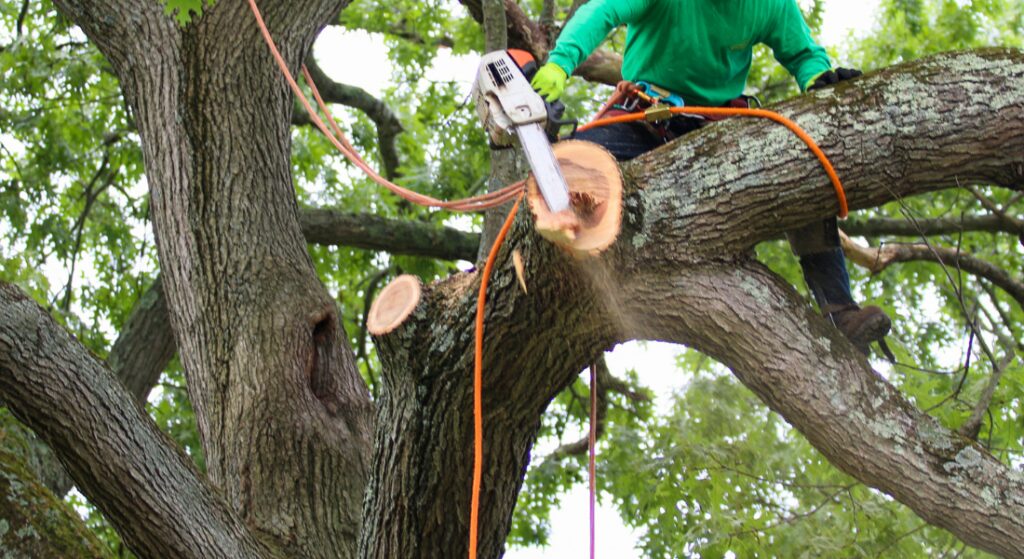
The actual cutting and lowering process varies with tree size and location. Small trees in open areas can often be felled with a single cut, allowed to drop to the ground, and then cut into manageable sections. Larger trees typically require systematic dismantling: climbers ascend with ropes and harnesses, cutting off branches section by section and lowering them to the ground with rigging systems. The trunk is then cut into sections from top to bottom, each piece lowered carefully to avoid damaging property. This methodical process ensures safety but takes considerable time—removing large trees might require a full day or more of careful work.
After cutting down the tree, crews chip branches and haul debris away, leaving your property clean. Most tree removal services include cleanup in their quoted price, though you should confirm this. The stump is usually not included in basic removal—stump grinding or removal costs an additional $100-$400, depending on size. Some homeowners choose to leave stumps, which eventually decay, though removing the stump provides a cleaner appearance and prevents pest problems. The comprehensive nature of professional removal—planning, specialized climbing and cutting, rigging, debris processing, and cleanup—justifies costs that may initially seem high to those unfamiliar with the complexity of the job.
How Much Does Stump Removal or Grinding Cost?
The stump removal process represents a separate service from tree removal, with distinct pricing and considerations. Understanding stump options helps you decide whether to include this in your tree service.
Stump grinding is the most common and economical approach, typically costing $100-$400 depending on the size of the stump. This process uses a specialized machine with a rotating cutting wheel that grinds the stump and major roots into wood chips, reducing everything to below ground level. The grinding creates a pile of wood chips you can use as mulch or have hauled away (sometimes for an additional fee). Stump grinding removes visible stump portions but leaves roots underground to decay naturally over several years. This approach works well for most landscape situations and costs considerably less than complete removal.
Complete stump removal—excavating the entire stump and root ball—costs $300-$800 or more for large specimens. This intensive process requires heavy equipment to dig around and beneath the stump, breaking or cutting major roots, then lifting the entire mass from the ground. It leaves a large hole requiring significant fill dirt to restore the grade. While expensive and disruptive, complete removal is necessary when replanting trees in the same location or preparing sites for construction. Most homeowners choose grinding over complete removal unless specific circumstances demand the more extensive approach.
Many tree service companies offer stump removal as an add-on service when removing trees, often at a discount compared to hiring stump grinding as a separate job. When getting tree removal quotes, ask whether grinding the stump is included or what it would cost as an add-on. Bundling services often saves money compared to hiring different contractors for each task. Some property owners elect to delay stump grinding until they remove multiple trees, then have all stumps ground in one visit to minimize service call charges.
What Additional Services Affect Tree Removal Pricing?
Beyond basic tree removal, several related services may be necessary or desirable, each adding to the overall cost of your tree care project.
Tree trimming or pruning of nearby trees might be recommended or necessary during removal. If trees near the one being removed have grown together, trimming may be required to separate them safely. Some homeowners use the opportunity of having tree service professionals on-site to prune other trees needing attention, often at reduced rates compared to scheduling separate visits. Tree trimming costs vary widely—$80-$350 for small trees, $175-$700 for medium specimens, $300-$1,000+ for large trees—depending on size and extent of pruning needed.
Wood hauling represents another potential additional expense. Some tree service companies include debris removal in their base price, while others charge separately—typically $50-$100 for small loads, $100-$300 for full truckloads. If you want to keep wood for firewood, some services will cut and stack it for an additional fee of $50-$150. For valuable hardwoods like walnut or cherry, occasionally services will remove trees at reduced cost in exchange for keeping the lumber, though this is less common than many homeowners assume.
Emergency tree removal commands premium pricing, often 2-3 times normal rates. When storms knock trees onto homes or block access, tree removal companies charge more due to urgency, dangerous conditions, and after-hours work. Emergency services typically cost a minimum of $500-$1,000, even for relatively simple removals, with complex emergencies reaching several thousand dollars. While expensive, a prompt professional response prevents further damage and restores safety. Some homeowner’s insurance policies cover emergency tree removal when storms cause damage, though you’ll need to verify coverage and may need to pay upfront and seek reimbursement.
How Does Tree Size and Location Affect Removal Costs?
Tree size and location represent the two most significant factors that can affect your final removal bill. Understanding how these elements influence pricing helps you anticipate costs.
Tree size impacts cost through multiple mechanisms. Height is typically the primary measurement—most quotes reference tree height in making initial estimates. A small tree under 25-30 feet might cost $150-$500, while trees 30 to 60 feet average $500-$1,200. Trees 60-80 feet commonly cost $1,200-$2,000, and specimens over 80 feet can reach $2,000-$4,000 or more. However, height alone doesn’t tell the complete story—diameter matters too. A tree 50 feet tall with a 12-inch trunk costs far less than one 50 feet tall with a 36-inch trunk. The tree’s size determines cutting time, number of sections needed, and debris volume, all driving labor and disposal costs.
The location of the tree dramatically affects complexity and, therefore, price. A tree in an open field costs far less than an identical specimen squeezed between two houses with power lines running through it. Proximity to structures means pieces must be carefully lowered with ropes and rigging rather than simply felled, multiplying labor time. Trees near power lines require extreme caution and may need utility company involvement, adding coordination and potential fees. Poor accessibility—sites where trucks and equipment can’t get close—forces manual debris hauling that substantially increases labor. The same tree could cost $800 in an open, accessible location or $2,500 in a tight, difficult site. Always have tree service professionals assess your specific situation rather than relying on general averages.
The landscape surrounding the tree also influences removal approaches and costs. Trees in manicured gardens require extra care to protect surrounding plantings, slowing work and increasing costs. Trees that have grown into fences, sheds, or other structures complicate removal as these entanglements must be carefully managed. Soft or sloped ground that prevents heavy equipment access necessitates lighter machinery or manual approaches that take more time. These site-specific factors explain why obtaining detailed estimates from companies that have actually inspected your tree provides more reliable pricing than phone quotes based on general descriptions.
What Should You Expect to Pay for Different Tree Types?
Different tree species vary in removal difficulty due to wood hardness, growth patterns, and typical sizes. While size remains the primary cost driver, species matters too.
Pine trees are among the easier and less expensive trees to remove due to their relatively soft wood and straightforward branching patterns. A medium pine tree might cost $500-$800 to remove compared to $700-$1,000 for a similar-sized oak. However, very large pine trees still command high prices due to their size—a 100-foot pine could easily cost $2,000-$3,000 to remove, despite being somewhat easier to cut than hardwood species. Pine’s advantage is primarily in cutting speed rather than overall job complexity.
Oak and other hardwood trees typically cost 10-25% more than similar-sized softwoods due to denser wood that dulls chainsaw blades faster and takes longer to cut. Maple, ash, cherry, and walnut also fall into this category. Additionally, many hardwoods develop wide-spreading branch structures that require more time to dismantle compared to the more columnar growth of many conifers. A large oak removal, removing large trees, might cost $1,500-$2,500, where a similar-height pine might cost $1,200-$2,000.
Trees with problematic characteristics command premium pricing. Species prone to sudden breakage when dead (like ash killed by the emerald ash borer) are dangerous to work on, increasing costs. Trees with multiple trunks complicate removal compared to single-trunk specimens of the same overall size. Eucalyptus and some palm species have specific removal challenges—palms don’t have traditional trunks, but rather fibrous stems that require different cutting approaches, typically costing $200-$900 depending on height. When requesting quotes, mention the tree species if you know it, as this helps tree removal companies provide more accurate estimates.
How Can You Get Accurate Cost Estimates for Tree Removal?
Obtaining reliable quotes helps you budget appropriately and select qualified tree service providers at fair prices. Following systematic approaches to requesting estimates produces better results.
Always get at least three quotes from licensed, insured tree service companies. Never hire based on a single quote—competitive bidding ensures fair pricing and reveals significant price variations that indicate either bargain services with potential quality issues or overpriced providers. When requesting quotes, provide detailed information: tree height (estimate if unknown), location relative to structures and obstacles, access for equipment, and any special concerns. Better yet, have arborists visit to assess the tree in person—on-site evaluations produce more accurate estimates than phone quotes based on descriptions.
Verify that quotes include the same services to enable fair comparison. Some companies include stump grinding in their base price, while others list it separately. Confirm whether cleanup and debris hauling are included. Ask if the quote covers potential complications—some give baseline pricing assuming easy removal, then charge more if difficulties arise. Get a detailed breakdown of costs: labor, equipment, stump removal, cleanup, and any other fees. Written quotes protect you from unexpected charges and provide documentation if disputes arise.
Check credentials before hiring. Verify companies carry proper liability insurance and workers’ compensation coverage—uninsured services put you at serious financial risk if workers are injured or property is damaged. Look for ISA (International Society of Arboriculture) certified arborists, indicating formal training and expertise. Check online reviews and Better Business Bureau ratings. Don’t automatically choose the lowest quote—extremely low prices often indicate uninsured operations, inexperienced crews, or hidden fees added later. The goal is to find qualified professionals at fair, competitive prices, not simply the cheapest option.
When Is the Best Time to Schedule Tree Removal to Save Money?
Timing your tree removal can significantly affect what you pay, as demand for tree removal services fluctuates throughout the year.
Late fall through early spring represents the lowest-cost season for tree removal in most regions. Demand drops during dormant seasons when trees aren’t actively growing, and landscaping activity slows. Tree service companies often offer discounts of 10-25% during these slower months to maintain steady work. Winter removal also benefits from frozen ground that supports heavy equipment and less concern about damaging lawns with machinery. Additionally, removing deciduous trees while they’re bare of leaves reduces debris volume and makes assessment easier. However, some very cold regions see limited winter tree work due to dangerous conditions.
Summer represents peak pricing season in most areas. Landscape work surges, storm damage from summer weather creates emergency demand, and many homeowners tackle outdoor projects during good weather. The demand for tree removal services during peak season means less negotiating room on price and potentially longer wait times for scheduling. If you have flexibility, scheduling for fall or winter rather than summer can save several hundred dollars on large tree removal projects.
Planning ahead allows you to avoid emergency pricing that can cost two to three times normal rates. If you identify a dangerous tree, schedule its removal during low-season months rather than waiting until storm season, when it might fail and require emergency service. Many companies offer free or reduced-cost inspections—taking advantage of these can help identify problems early, when you can schedule removal strategically. The exception to seasonal planning is genuinely dangerous trees that pose imminent threats—these warrant immediate removal regardless of cost, as the risk of damage or injury exceeds the premium pricing.
What Questions Should You Ask Tree Service Companies?
Asking the right questions when interviewing tree removal companies helps you identify qualified professionals and avoid common pitfalls that lead to poor service or high costs.
First, verify insurance and licensing: “Do you carry both liability insurance and workers’ compensation?” Request proof of both—liability protects your property, while workers’ comp protects you from being sued if workers are injured. Ask: “Are you licensed and bonded?” Requirements vary by state, but legitimate tree service companies comply with local regulations. “Do you have ISA-certified arborists on staff?” While not always necessary for basic removal, certified credentials indicate expertise and professionalism.
Regarding the specific job, ask: “What exactly does your quote include?” Confirm whether stump grinding, cleanup, and debris hauling are included or cost extra. “How long will the job take?” This helps you plan and indicates the company’s assessment of job complexity. “What techniques will you use to remove this tree?” Understanding their approach reveals expertise and helps you evaluate whether the plan seems appropriate for your situation. “Will you provide a written, detailed estimate?” Verbal quotes are worthless if disputes arise.
Finally, ask about potential complications: “Could the final price change from the estimate? Under what circumstances?” Some quotes are firm while others allow surcharges if unexpected difficulties arise. “Do you guarantee your work?” Understanding recourse if something goes wrong protects you. “Can you provide references from recent similar jobs?” Speaking with past clients reveals reliability and quality. These questions help you evaluate tree removal companies comprehensively rather than choosing based solely on price.
Professional Tree Removal in Calgary – Done Safely, Done Right
Tree removal isn’t just about cutting wood.
It’s about:
- Protecting your home and nearby structures
- Managing risk around fences, roofs, and power lines
- Keeping your yard clean and damage-free
- Ensuring the job is done safely and efficiently
Our experienced crew understands the unique challenges of Calgary properties — tight urban lots, mature neighborhoods, unpredictable weather, and frozen ground conditions.
We don’t take shortcuts. We use proper equipment, safe dismantling techniques, and careful lowering methods to protect everything around your tree.
Call us today for a free quote!
Frequently Asked Questions About Tree Removal Costs
Q. Does homeowners’ insurance cover tree removal costs?
A. Insurance typically covers tree removal only when the tree damages a covered structure like your home, fence, or garage. Removing dangerous trees before they cause damage usually isn’t covered, nor is the removal of trees that fall without damaging insured property. Review your specific policy and consider the costs involved in removal versus potential deductibles before filing claims for borderline situations.
Q. Can I remove a large tree myself to save money?
A. While legally possible on your own property in most areas, DIY large tree removal is extremely dangerous without proper training, equipment, and insurance. Professional tree removal would cost less than potential medical bills, property damage, or liability if something goes wrong. Many companies offer to do the dangerous removal and let you handle debris cleanup yourself for reduced rates—a safer compromise.
Q. How much does emergency tree removal after a storm cost?
A. Emergency services typically cost 2-3 times normal rates, with minimums often starting at $500-$1,000. A tree that might cost $800 to remove under normal circumstances could cost $1,500-$2,400 as an emergency. However, when a fallen tree blocks access or threatens further damage, the premium pricing is often necessary. Some insurance policies cover emergency tree removal.
Q. Is stump grinding really necessary or, can I leave the stump?
A. Leaving stumps is legal and won’t harm your property, though they’re unsightly and attract insects. Over 5-10 years, stumps decay naturally. However, they interfere with mowing, create tripping hazards, and can spawn new shoots requiring ongoing cutting. For these reasons, most homeowners choose grinding even though it costs an additional $100-$400 typically.
Q. Do tree removal companies offer discounts for removing multiple trees?
A. Many tree service companies offer 10-20% discounts when removing multiple trees during one visit since mobilization costs are spread across multiple jobs. When requesting cost estimates, mention if you want to remove several trees—bundling saves money compared to separate removals scheduled at different times.
Q. What’s the average price to remove a tree per foot of height?
A. While some companies quote per foot ($8-$15 per foot is common), many factors beyond height affect final costs. A 50-foot tree might cost $400-$2,000 depending on size and location, accessibility, species, and condition. Per-foot pricing provides only rough estimates—actual quotes require considering all the complexity of the job factors.
Key Takeaways: Understanding Tree Removal Costs
- Average costs range from $400-$1,200: Small trees under 30 feet cost $150-$500; medium trees 30-60 feet cost $500-$1,000; large trees over 60 feet cost $1,000-$2,500+; massive or complex removals can exceed $4,000
- Size and location are primary cost factors: Tree height and trunk diameter determine base pricing, while accessibility, proximity to structures, and power lines can double or triple costs for challenging removals
- Stump removal is typically separate: Grinding costs an additional $100-$400; complete stump removal costs $300-$800; many homeowners choose grinding for a cleaner landscape at a reasonable cost
- Emergency removal costs 2-3 times normal rates: Storm damage creates urgent demand; while expensive, emergency response prevents further damage and restores safety
- Get multiple detailed written quotes: Compare at least three estimates that itemize services, verify insurance and licensing, and understand what’s included in base pricing versus additional charges
- Seasonal timing affects pricing: Late fall through early spring offers the lowest rates; summer represents peak pricing due to higher demand for tree removal services
- Species influences removal difficulty: Hardwoods cost 10-25% more than softwoods due to cutting time; trees with structural complications or dangerous conditions command premium pricing
- Professional removal includes comprehensive service: Assessment, safe dismantling, debris chipping and hauling, and cleanup justify costs that reflect skill, equipment, and liability management
- Many variables affect final costs: Tree health, multiple trunks, entanglements with structures, crane requirements, and disposal needs all impact what you’ll actually pay
- Insurance and certification matter: Verify liability and workers’ comp coverage; ISA-certified arborists indicate expertise; proper credentials protect you from liability and ensure quality work
Store Hours
Mon-Sun:
9:00 AM - 6:00 PM
Events & Workshops
Follow us on

Contact Info
Explore
Subscribe to our latest insights
Subscribe to our Newsletter Event right now to be updated on special offers Gardening and Landscaping.
Copyright 2026. All rights reserved.
Mon - Sun: 9:00am - 6:00pm


