Mon-Sun: 9 AM - 6 PM


SPRUCE IT UP GARDEN CENTRE
Spruce It Up, Green It Up, Prune It Up, we've got you covered!
What’s the Most Expensive Part of Landscaping
Understanding landscaping costs helps homeowners plan realistic budgets for transforming their outdoor spaces and avoid the sticker shock that comes with professional landscaping projects. The real cost of landscape improvements varies tremendously—from a few thousand dollars for basic landscaping updates to over $100,000 for comprehensive transformations with extensive hardscaping, irrigation systems, and premium materials like natural stone. Knowing which elements of landscaping drive the highest costs, what typical cost ranges look like for different features, and how various cost factors affect your final bill empowers you to make informed decisions about where to invest your landscaping budget. This comprehensive cost breakdown reveals what drives landscaping prices, explains why certain components are the most expensive part of landscaping, provides realistic cost ranges per square foot for common features, and helps you budget effectively, whether you’re tackling a small garden refresh or a complete backyard redesign.
What Is the Average Cost of a Landscape Project?
Understanding typical landscape project costs helps homeowners set realistic expectations and budget appropriately for outdoor improvements. However, landscaping costs vary wildly depending on numerous factors.
The average cost of landscaping for a typical residential property ranges from $5,000 to $25,000 for moderate projects, with most homeowners spending around $10,000-$15,000. Basic landscaping improvements like new sod, simple planting beds, and mulch may cost $3,000-$8,000 for an average-sized yard. Mid-range projects incorporating hardscaping elements such as a modest patio, basic retaining walls, improved drainage, and varied plantings typically cost $15,000-$40,000. High-end landscape transformations with extensive hardscaping, custom water features, outdoor kitchens, sophisticated irrigation systems, and professional landscape design can easily exceed $50,000-$100,000 or more, depending on the scope and materials chosen.
Per square foot pricing provides another useful framework, though costs vary greatly based on project complexity. Basic softscaping (plants, lawn, mulch) averages $2-$8 per square foot. Moderate landscaping, including both soft and hard elements, typically costs $8-$20 per square foot. Premium landscaping with extensive hardscaping and high-end materials ranges $20-$50+ per square foot. A complete backyard landscaping cost breakdown for a 2,000 square foot area might range from $4,000 for basic improvements to over $100,000 for luxury installations. Understanding these ranges helps you determine whether quotes you receive align with typical landscaping prices or represent outliers requiring further investigation.
What Are the Most Expensive Elements of Landscaping?
Identifying which landscape features command the highest costs helps you prioritize spending and understand where your landscaping budget goes.
Hardscaping represents the most expensive part of landscaping for most projects. This category includes patios, driveways, retaining walls, walkways, outdoor kitchens, and other structural elements built from materials like natural stone, pavers, concrete, or brick. Hardscaping costs per square foot range from $15-$50 for basic concrete or simple pavers to $50-$150+ for premium natural stone installations. A modest 300 square foot patio might cost $5,000-$15,000, while an elaborate 1,000 square foot outdoor living space with built-in features could exceed $50,000-$100,000. The combination of material costs, extensive labor requirements, and specialized skills needed for proper installation makes hardscaping dramatically more expensive than softscaping alternatives.
Professional landscape design services and initial planning also represent high costs, though they’re essential for achieving cohesive, functional results. Hiring a landscape designer typically costs $1,500-$5,000 for basic plans, $5,000-$15,000 for moderate projects, and $15,000+ for comprehensive designs of large or complex properties. While these design costs may seem high compared to DIY landscaping approaches, professional designers help you budget effectively, avoid costly mistakes, prevent drainage problems, and create spaces that integrate aesthetically while meeting functional requirements. The upfront investment in quality design often saves money compared to trial-and-error approaches or having to redo poorly planned installations.
Sophisticated irrigation systems rank among the pricier landscape components. A professionally installed irrigation system for an average residential property typically costs $3,000-$8,000, with larger properties or complex systems with multiple zones, smart controllers, and drip irrigation reaching $10,000-$20,000 or more. While irrigation may cost more upfront than hand watering, the systems pay for themselves through water conservation, healthier plants, and time savings. Similarly, proper drainage solutions—including French drains, catch basins, and grading improvements—can cost $2,000-$10,000 depending on complexity but prove essential for protecting your landscape investment and preventing water damage to structures.
How Do Labor Costs Impact Overall Landscaping Expenses?
Understanding the labor costs component of landscaping helps explain why professional landscaping can be expensive, even when material costs seem reasonable.
Labor costs typically represent 40-60% of total landscaping costs for most projects, sometimes even more for labor-intensive work like complex hardscaping or extensive grading. Professional landscapers generally charge $50-$150 per hour, depending on the region, with specialized skills like stone masonry or landscape design commanding premium rates. Landscape companies also need to cover overheated including equipment, insurance, licensing, and administrative costs, all factored into hourly rates or project bids. In markets with a higher cost of living, like landscaping costs in Toronto or other major metropolitan areas, labor costs can be 25-50% higher than in smaller communities.
The complexity of installation significantly affects labor requirements and costs. Installing a simple lawn takes hours, while building a multi-level patio with retaining walls requires days or weeks of skilled work. Projects requiring heavy equipment—excavation for drainage, moving large boulders for water features, or grading for proper slopes—add equipment rental or ownership costs that increase the project’s price. Challenging site conditions like steep slopes, poor soil requiring amendment, or limited access preventing machinery use all increase labor time and therefore costs significantly.
DIY landscaping can reduce labor costs but requires a realistic assessment of your skills, time availability, and tool access. While planting shrubs or spreading mulch represents manageable DIY work for many homeowners, complex projects like building retaining walls, installing irrigation, or ensuring proper drainage often justify professional help. Poor DIY execution can create problems costing more to fix than hiring professionals initially would have cost. Understanding what you can reasonably handle yourself versus when to hire a landscape professional helps you balance cost savings against quality results.
What Hardscaping Features Cost the Most?
Breaking down hard landscaping costs by specific features reveals where hardscaping budgets get allocated and which elements command premium pricing.
Outdoor kitchens and entertainment areas represent the pinnacle of hardscaping costs. A basic outdoor kitchen with a built-in grill, countertop, and simple storage might cost $10,000-$20,000. Comprehensive outdoor kitchens with premium appliances, extensive countertops, covered structures, built-in seating, and heating/cooling elements can exceed $50,000-$100,000. These costs reflect not just the hardscaping itself but also gas lines, electrical work, plumbing for sinks, and weatherproof cabinetry and appliances designed for outdoor use.
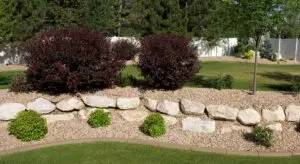
Natural stone retaining walls rank among the most expensive due to material costs and skilled labor requirements. Retaining walls serve both functional (preventing erosion, creating level areas) and aesthetic purposes. Simple concrete block walls cost $20-$40 per square foot, while natural stone walls range from $50- $150+ per square foot, depending on stone type and complexity. A 50-foot-long, 4-foot-high natural stone retaining wall could easily cost $15,000-$40,000. Taller walls requiring engineering for structural integrity add professional fees and reinforcement costs.
Premium patio materials create substantial cost variations. Basic concrete patios cost $8-$15 per square foot, stamped or stained concrete ranges $12-$25 per square foot, standard pavers cost $15-$30 per square foot, and premium natural stone like flagstone or bluestone can reach $40-$100+ per square foot. For a 400 square foot patio, this means costs ranging from $3,200 for basic concrete to $40,000+ for high-end natural stone installations. Material choice represents the single biggest variable in patio costs, explaining why seemingly similar patios can have vastly different price tags.
How Much Does Softscaping Cost Compared to Hardscaping?
Understanding the cost difference between soft and hard landscape elements helps homeowners balance their outdoor space investments.
Softscaping—including lawn installation, plants, trees, shrubs, flowers, and mulch—generally costs far less per square foot than hardscaping. New sod installation typically costs $0.80-$2.50 per square foot, including soil preparation and installation. Planting beds with shrubs and perennials averages $5-$20 per square foot, depending on plant size and density. Mature trees range from $200 to $2,000+ each, depending on species and size. Mulch costs $30-$80 per cubic yard delivered, covering about 100 square feet at a 3-inch depth. A comprehensive softscaping installation for a typical yard might cost $5,000-$15,000 compared to $20,000-$80,000 for equivalent square footage of hardscaping.
However, softscaping requires ongoing maintenance costs that hardscaping generally doesn’t. Lawn care, including mowing, fertilization, aeration, and weed control costs $100-$300+ monthly during the growing season. Plant replacement for annuals costs several hundred to thousands annually. Mulch needs refreshing every 1-2 years. These ongoing costs mean that over a 10-20 year period, softscaping’s total cost of ownership can approach or exceed initial hardscaping investments. Sustainable landscaping approaches using native plants, reduced lawn areas, and drought-tolerant species can minimize these ongoing expenses.
The balance between soft and hard landscaping affects both initial costs and long-term maintenance. Properties with extensive lawns and planting beds have lower initial costs but higher ongoing maintenance. Conversely, hardscaping-heavy landscapes cost more upfront but require primarily cleaning and occasional sealing rather than regular care. Many successful landscape designs blend both approaches—using hardscaping for high-use areas like patios and pathways while employing softscaping for visual interest and environmental benefits—achieving both reasonable initial costs and manageable maintenance requirements.
What Cost Factors Most Significantly Affect Landscaping Prices?
Beyond specific features, several overarching factors influence landscaping project costs and explain why landscaping costs vary between seemingly similar projects.
Property size and the size of the area being landscaped represent primary cost drivers. Larger properties simply require more materials, more plants, more hardscaping, and more labor hours. However, per square foot costs usually decrease as project size increases due to economies of scale—the cost per square foot for a 5,000 square foot landscape is often 20-40% less than for a 500 square foot area because fixed costs like design, mobilization, and equipment spread across more square footage. Understanding this relationship helps explain why small garden renovations might seem disproportionately expensive on a per-square-foot basis.
Site conditions dramatically impact costs. Flat, accessible properties with good soil cost far less to landscape than steep slopes requiring extensive grading and retaining walls. Poor drainage necessitating French drains or regrading adds thousands to project costs. Rocky or heavily compacted soil requires amendment or replacement. Limited access to machinery forces manual labor that takes longer and costs more. Existing features requiring removal—old concrete, overgrown vegetation, or unwanted structures—add demolition and disposal costs before new landscape construction even begins.
Material selection causes dramatic cost variations even for identical features. A 300 square foot patio could cost $4,500 with basic concrete, $7,500 with standard pavers, or $20,000+ with premium natural stone. Similarly, choosing high-end plants over basic varieties, opting for mature trees versus young specimens, or selecting exotic hardwoods for decking over pressure-treated lumber all affect the project’s cost substantially. Understanding typical cost ranges for different material grades helps determine where to splurge versus save based on your priorities and budget constraints.
How Do Regional Differences Affect Landscaping Costs?
Geographic location significantly influences landscaping prices due to variations in labor markets, material availability, climate requirements, and local regulations.
Urban versus rural location creates substantial cost differences. Major metropolitan areas typically see landscaping prices 30-60% higher than rural regions due to higher labor costs reflecting the local cost of living, increased overhead for landscaping companies, and greater competition for skilled workers. Landscaping costs in Toronto, Vancouver, or other major Canadian cities often exceed those in smaller Ontario or Alberta communities by 40-50% for identical work. Homeowners should compare local landscaping company quotes rather than national averages when budgeting.
Climate and growing conditions affect both plant costs and long-term maintenance requirements. Regions requiring irrigation systems for landscape survival add these costs to every project. Areas with short growing seasons face limited plant selection and potentially higher prices for suitable species. Conversely, year-round growing climates enable longer construction seasons that may reduce costs through increased contractor competition. Freeze-thaw cycles affecting hardscaping durability require higher-quality materials and installation techniques in northern regions, increasing costs compared to temperate areas.
Local building codes and permit requirements add varying costs depending on the jurisdiction. Some municipalities require permits for retaining walls over certain heights, deck construction, irrigation taps, or drainage modifications, adding permit fees and potentially engineering costs. Other areas have minimal regulation of residential landscaping. Environmental regulations protecting sensitive areas, restricting water use, or mandating sustainable landscaping practices can increase initial costs while providing long-term benefits. Research local regulations when determining landscaping costs to include these often-overlooked expenses in your budget.
What Hidden or Unexpected Costs Should Homeowners Anticipate?
Understanding potential additional expenses beyond quoted prices helps prevent budget overruns and unpleasant surprises during landscape projects.
Utility location and protection represent a commonly overlooked cost. Before excavation for any hardscaping, underground utilities must be located—usually for free through services like Call Before You Dig. However, working around discovered utilities, relocating conflicting lines, or protecting existing infrastructure during construction adds costs not always included in initial estimates. Similarly, tree root systems from existing or neighboring trees may require specialized cutting or working around, adding labor time and potentially requiring arborist services.
Drainage issues discovered during construction frequently trigger additional costs. Initial estimates assume normal drainage conditions, but discovering high water tables, underground springs, or heavy clay soil that prevents percolation may necessitate more extensive drainage solutions than planned. A project quoted at $20,000 might become $25,000-$28,000 once proper drainage is added to ensure the new landscape doesn’t fail within a few years. Reputable landscaping professionals should identify drainage concerns during site assessment, but some problems only become apparent during excavation.
Ongoing costs associated with maintaining new landscaping often surprise homeowners who focus solely on installation expenses. That new irrigation system costs money to run—water bills typically increase $50-$200+ monthly during the growing season. Professional lawn care for newly installed sod costs $100-$300 monthly. Annual mulch refresh costs several hundred dollars. Fertilization, pest control, and plant replacement add ongoing expenses. Budget for these maintenance costs when deciding how much landscaping your overall budget can accommodate, not just initial installation costs.
How Can Understanding Landscaping Costs Help You Budget Effectively?
Armed with knowledge about cost breakdown and what drives landscaping prices, homeowners can make strategic decisions that maximize value within their budget constraints.
Prioritizing elements that provide the most value for your needs helps allocate limited budgets effectively. If outdoor entertaining is your priority, invest more in hardscaping like patios and outdoor kitchens, even if it means simpler plantings initially. If curb appeal drives your project, focus the landscaping budget on front-yard improvements visible from the street. Understanding that you don’t need to complete everything simultaneously allows phasing—installing critical hardscaping and drainage first, then adding softscaping and irrigation in subsequent years as budget permits.
Getting multiple detailed quotes from landscaping professionals enables informed comparison. Request itemized estimates showing material costs, labor costs, and specific tasks rather than lump-sum bids. This transparency reveals where costs concentrate and where you might save through material substitutions or feature elimination. Compare similar scopes across contractors—some may include design costs while others quote separately, or one might include irrigation while another lists it as optional. Understanding what each quote encompasses ensures fair comparison.
Consider DIY for appropriate tasks while hiring professionals for complex work. Homeowners can often handle mulching, simple planting, or lawn installation with rented equipment, saving 40-60% on labor costs for these elements. However, complex hardscaping, irrigation installation, major drainage work, and grading typically justify professional help due to required expertise and potential costs if done incorrectly. This hybrid approach—professionals for technical work, DIY for straightforward tasks—often provides the best balance of cost savings and quality results for determining landscaping project budgets.
What Are Typical Cost Ranges for Different Landscape Features?
Providing specific cost ranges for common landscape elements helps homeowners understand what individual components typically cost and build realistic project budgets.
Softscaping costs:
- Sod installation: $0.80-$2.50 per square foot
- Hydroseeding: $0.50-$1.50 per square foot
- Planting bed installation: $5-$20 per square foot
- Small shrub installation: $50-$150 each
- Large shrubs: $150-$500 each
- Small trees (6-8 feet): $150-$400
- Large mature trees (15+ feet): $800-$3,000+
- Mulch installation: $30-$80 per cubic yard
- Topsoil: $20-$50 per cubic yard
Hardscaping costs:
- Concrete patio: $8-$15 per square foot
- Paver patio: $15-$30 per square foot
- Natural stone patio: $25-$100+ per square foot
- Concrete walkway: $8-$12 per square foot
- Gravel pathways: $5-$10 per square foot
- Retaining walls (concrete block): $20-$40 per square foot
- Natural stone retaining walls: $50-$150 per square foot
- Wood deck: $30-$75 per square foot
- Composite deck: $40-$100 per square foot
Additional features:
- Basic irrigation system: $3,000-$8,000
- French drain installation: $20-$50 per linear foot
- Simple water feature: $1,500-$5,000
- Elaborate water feature: $10,000-$50,000+
- Outdoor lighting: $2,000-$8,000
- Landscape design fees: $1,500-$15,000+
These cost ranges provide general guidance, though actual costs depend on location, materials selected, and project complexity. Use them as starting points for budget planning rather than definitive quotes.
Frequently Asked Questions About Landscaping Costs
Q. Is it cheaper to do landscaping yourself or hire professionals?
A. DIY landscaping costs 40-70% less than professional work for the same features by eliminating labor costs. However, you’ll invest significant time, need to rent or buy tools, and risk costly mistakes if work is done improperly. For complex projects like hardscaping, irrigation, or drainage, professional results usually justify the higher costs. A hybrid approach—DIY for simple tasks, professionals for technical work—often provides the best value.
Q. How much should I budget for a complete backyard transformation?
A. Complete backyard transformations typically cost $15,000-$50,000 for average properties, with luxury installations exceeding $100,000. Budget $10-$30 per square foot for moderate renovations, including both hardscaping and softscaping. Start with a professional consultation ($200-$500) to get accurate estimates based on your specific property and goals before committing to a full project budget.
Q. What landscape improvements provide the best return on investment?
A. Well-maintained lawns, strategic tree placement for shade and curb appeal, and functional patios or decks typically return 80-150% of investment in increased property value. Professional landscape design adds 5-15% to home value. However, over-improving beyond neighborhood norms may not return full investment. Focus on improvements that enhance livability and match the surrounding properties’ landscape quality.
Q. How can I reduce landscaping costs without sacrificing quality?
A. Choose local, native plants that cost less and require less maintenance than exotics. Use smaller, younger plants that establish better and cost significantly less than mature specimens. Phase projects over multiple years to spread costs. Handle simple tasks like mulching and planting yourself while hiring professionals for complex work. Select mid-range materials—standard pavers over natural stone, for example—that provide good durability at lower prices.
Q. Should landscape design fees be included in my total budget?
A. Yes, allocate 5-10% of your total landscaping budget to professional design if hiring a landscape designer. While this seems expensive, proper design prevents costly mistakes, creates cohesive results, and often saves money by optimizing material use and avoiding problem-solving during construction. For projects under $10,000, some landscape companies include basic design in installation quotes.
Q. How do landscaping costs compare to indoor renovations?
A. Landscaping typically costs $10-$30 per square foot for moderate projects, less than kitchen ($150-$400 per square foot) or bathroom ($100-$300 per square foot) renovations but more than simple painting or flooring. However, landscape improvements dramatically expand usable living space and provide continuous curb appeal benefits. Consider outdoor investments as creating additional “rooms” for your home at a lower cost per square foot than interior additions.
Key Takeaways: Understanding Landscaping Cost Breakdown
- Hardscaping is the most expensive element: Patios, retaining walls, and outdoor structures typically cost $20-$150 per square foot and represent 50-70% of most landscape budgets
- Labor costs dominate total expenses: Professional labor typically represents 40-60% of landscaping costs, with rates ranging from $50 to $150 per hour, depending on region and specialty
- Average landscape projects cost $10,000-$25,000: Basic improvements start around $3,000-$8,000 while comprehensive transformations can exceed $50,000-$100,000 depending on scope and materials
- Per square foot pricing varies dramatically by feature: Softscaping averages $2-$8 per square foot while hardscaping ranges from $15 to $50+ per square foot for typical installations
- Material selection creates significant cost variations: The same patio could cost $4,500 with concrete, $9,000 with pavers, or $30,000+ with premium natural stone
- Hidden costs include drainage, utilities, and ongoing maintenance: Budget an additional 10-20% beyond quoted prices for unexpected issues and plan for ongoing costs like irrigation, lawn care, and plant replacement
- Regional differences affect pricing substantially: Urban areas see costs 30-60% higher than rural regions; climate, local regulations, and material availability also impact prices significantly
- Professional design costs 5-10% of project budgets: This upfront investment typically saves money by preventing mistakes and optimizing material use while creating cohesive, functional landscapes
- Phasing projects over multiple years spreads costs: Complete critical elements like drainage and primary hardscaping first, then add softscaping and amenities as budget permits
- Understanding cost drivers enables strategic decisions: Knowledge of what affects landscaping costs helps homeowners prioritize spending, identify savings opportunities, and budget effectively for outdoor improvements
Store Hours
Mon-Sun:
9:00 AM - 6:00 PM
Events & Workshops
Follow us on

Contact Info
Explore
Subscribe to our latest insights
Subscribe to our Newsletter Event right now to be updated on special offers Gardening and Landscaping.
Copyright 2026. All rights reserved.
Mon - Sun: 9:00am - 6:00pm